Accurate Interfaces
Mounting features and internal geometry needed to align with the scanner hardware.


MARINE & SUBSEA ENGINEERING
A full-scale SLA functional prototype enclosure supporting the development of a compact, diver-operated underwater 3D laser scanner.
PROJECT OVERVIEW
Savante Subsea are specialists in underwater laser inspection, precision measurement, 3D scanning and photogrammetry for demanding offshore and marine engineering applications.
Since 2003, the company has developed high-precision subsea measurement solutions for sectors including offshore energy, renewables, defence, marine science and civil engineering. Its systems create detailed three-dimensional records of submerged assets, helping operators assess geometry, degradation and damage while supporting inspection, maintenance and repair planning.
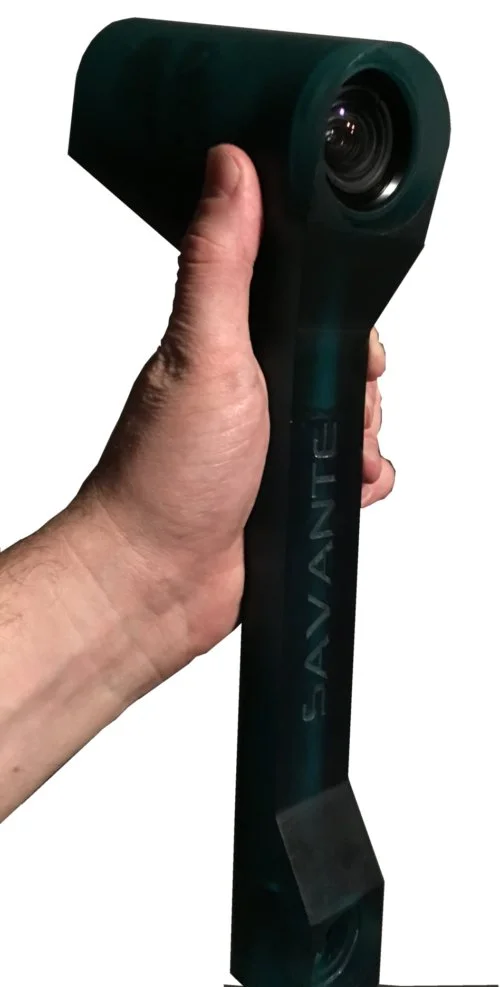
The CTS-3D is a compact, diver-operated underwater laser scanner that combines laser measurement and imaging to create high-resolution surface point clouds of submerged structures. Its handheld format allows measurements to be collected around difficult-access features such as risers, conductors, mooring systems and platform appurtenances.
Savante asked North Sea 3D to manufacture a precision, full-scale prototype enclosure for the CTS-3D. The part needed to reproduce the supplied digital geometry accurately enough to accommodate the scanner hardware and support assembly, diver handling and practical evaluation.
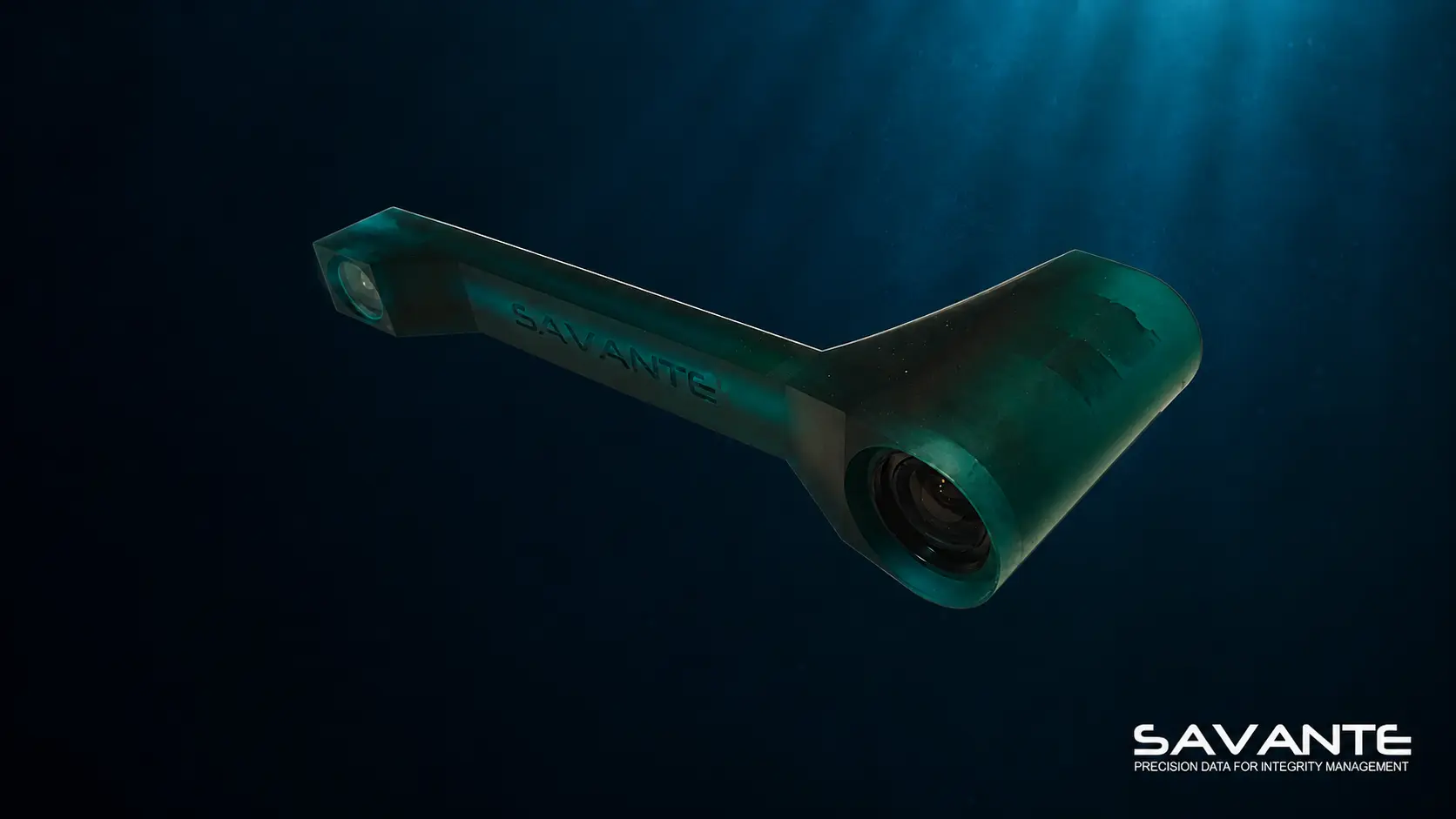
The resulting component was not simply a visual model. It was a functional prototype that was successfully used subsea as part of the product-development process.
Learn about Savante's CTS-3D technology ↗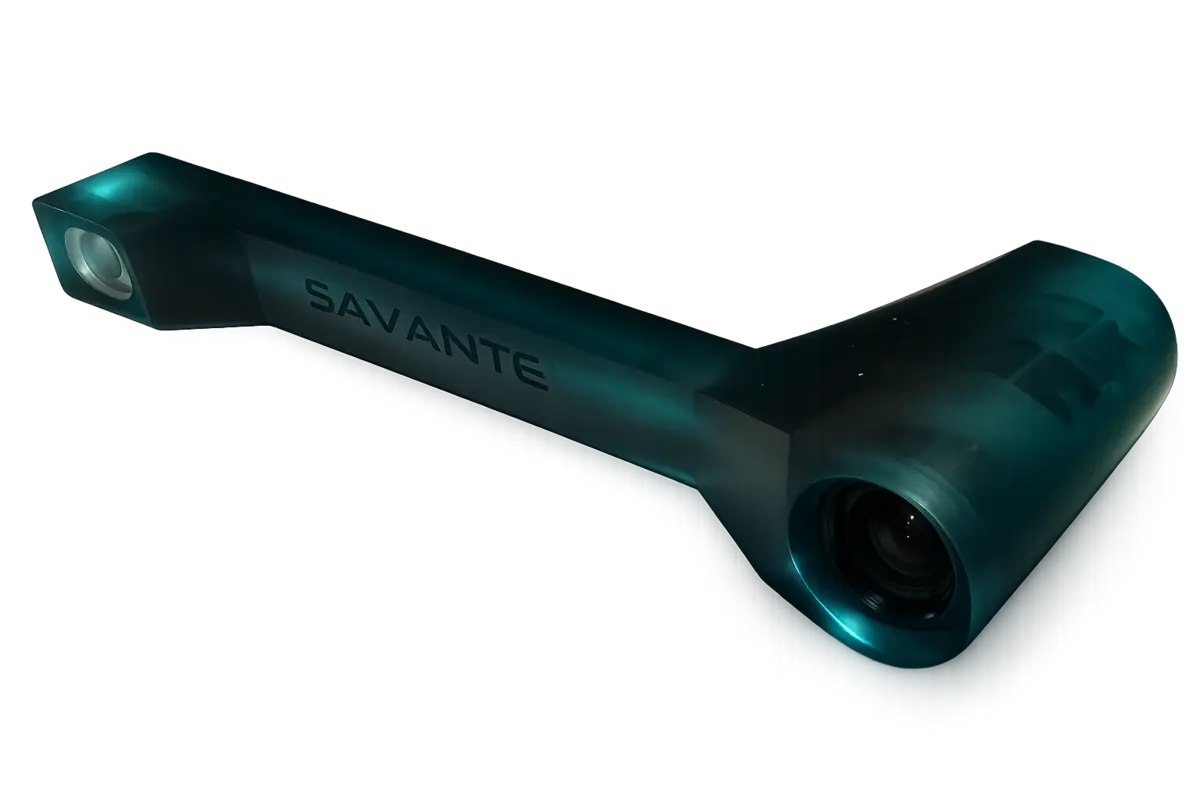
THE CHALLENGE
The enclosure had to bring together optical, mechanical and ergonomic requirements within a compact handheld form.
Mounting features and internal geometry needed to align with the scanner hardware.
Fine features and complex surfaces had to be reproduced consistently.
The prototype needed sufficient toughness for assembly, handling and subsea evaluation.
Additive manufacture had to support development without conventional tooling lead time.
THE SOLUTION
The enclosure was manufactured at 1:1 scale on a Formlabs Form 2 using Formlabs Tough V2 resin.
SLA was selected for its ability to reproduce smooth surfaces, fine features and accurate interfaces across complex enclosure geometry. Tough V2 provided a useful balance of strength, impact resistance and practical handling performance for the functional prototype.
Fine feature resolution for detailed enclosure geometry and interfaces.
Dimensional control to support hardware integration and assembly checks.
Functional toughness for repeated handling and evaluation.
Tool-free production enabling rapid manufacture and design iteration.
The process provided the accuracy and surface quality required for an enclosure containing closely integrated optical and electronic hardware.
04 THE RESULT
The completed enclosure enabled Savante to assemble, handle and evaluate the CTS-3D configuration in its intended operating environment.
A 1:1 component suitable for physical integration and practical assessment.
The functional prototype was used subsea during product evaluation.
Production without dedicated moulds or conventional manufacturing tooling.
Physical evaluation supported continued development of the scanner system.
TECHNOLOGY CONTEXT
Savante developed the CTS-3D as a handheld, diver-operated tool capable of creating detailed 3D point-cloud representations of submerged structures. This supports inspection and measurement around assets such as conductors, risers, moorings and platform appurtenances.
Compact subsea measurement systems allow data to be collected from difficult-access locations while supporting better visualisation of geometry, wear and damage.
PROJECT INSIGHT
Advanced additive manufacturing can bridge the gap between a digital design and meaningful real-world testing without waiting for production tooling.
For complex engineering equipment, a full-scale functional prototype can reveal assembly, access, handling and integration considerations that are difficult to evaluate on screen alone. It also provides a clear route for communicating the design to stakeholders before committing to later production processes.
Requirements assessed around the real application.
FDM and SLA options matched to performance needs.
Full-scale parts for assembly and evaluation.
Tool-free manufacture supports faster development.